
Inside the $1.5 Billion Hypercar Collection: A Masterclass in Automotive History
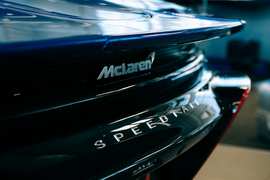
In the rarefied air of high-net-worth collecting, the impulse to hoard is a natural instinct. For most, the ultimate garage is a fortress—a private sanctuary designed to protect assets from the prying eyes of the public. However, German industrialist Friedhelm Loh has shattered this convention. By opening the doors to his staggering $1.5 billion hypercar collection, he has transformed a private treasury into a landmark institution.
As someone who has spent over a decade navigating the professional automotive landscape, I’ve seen my share of “private stashes.” But the Nationales Auto Museum—The Loh Collection—is in a league of its own. Located just an hour from Frankfurt, this isn’t merely a display of wealth; it is a meticulously curated timeline of engineering excellence that finally allows enthusiasts to witness rare cars that were previously relegated to the shadows of high-security warehouses.
The Genesis of an Automotive Empire
Friedhelm Loh is no stranger to building legacy. Having grown his family’s industrial firm into a global powerhouse with 90 subsidiaries and over 12,500 employees, his path to acquiring a $1.5 billion hypercar collection was paved by decades of entrepreneurial rigor. When a titan of industry turns his focus to performance machinery, the results are rarely modest.
The collection, now housed in a revitalized historic foundry, is a masterclass in architectural and automotive synergy. The museum blends industrial heritage with sleek, modern exhibition design, providing a stark, elegant contrast that highlights the curves of everything from pre-war classics to modern record-breakers. For those looking to invest in similar assets, tracking collector car values and understanding the provenance of such vehicles is crucial—a lesson clearly mastered by Loh.
Curating Excellence: The Highlights of the Loh Collection
Walking through the museum, you are greeted by an eclectic mix of history. The collection comprises roughly 130 vehicles representing 50 manufacturers, but it isn’t just about the volume; it’s about the sheer rarity.
The Dawn of Motoring
At one end of the spectrum sits the 1895 Benz Viktoria. It is a vital piece of the puzzle, serving as an evolutionary bridge from the earliest motorized carriages to the four-wheeled standard we recognize today. It serves as a reminder that even the most powerful hypercar collection in the world has humble roots in the mechanical ingenuity of the late 19th century.
Modern Icons and Concept Monsters
The centerpiece that inevitably draws the largest crowds is the Maybach Exelero concept. This is a machine that defies categorization. Originally engineered to test high-performance tires for Fulda, the Exelero is powered by a monstrous 5.9-liter twin-turbocharged V12. It is a design icon, a luxury statement, and a terrifyingly fast piece of art rolled into one.
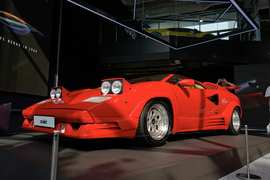
Beyond the concept cars, the facility houses the quintessential supercar pantheon. From the industry-shifting engineering of the Bugatti Veyron to the timeless, sweeping lines of the Lamborghini Miura, every corner of the floor represents a specific epoch of automotive aspiration.
Racing Pedigree: The Heavy Hitters
For those interested in the competitive side of the industry, the collection’s racing division is unparalleled. This is where the high-CPC keywords of the automotive world—such as “investment-grade race cars” and “blue-chip vehicle auctions”—start to feel very real.
The inclusion of the Ferrari F1-2000 is a testament to the intensity of the collection. Beside it, the Mercedes 300SL Gullwing—a car whose market valuation continues to skyrocket—sits in pristine condition. Perhaps the most significant piece for racing historians is the Le Mans 24 Hours-winning Audi R8. Remarkably, this is the only chassis of its kind outside of Audi’s own corporate archives, making it a “unicorn” in the world of professional car collecting.
Why This Matters for the Automotive Market
When a collection of this magnitude ($1.5 billion) is unveiled, it sends a ripple through the industry. Collectors and enthusiasts often wonder about the future of luxury automotive investments. Will these vehicles remain in private hands, or will we see more billionaires following Loh’s lead to establish public legacy museums?
The trend is clear: there is a growing demand for experiential luxury. Whether you are browsing for luxury cars in Los Angeles or exploring exotic car rentals in Miami, the desire to be near these engineering masterpieces is driving a cultural shift. The Nationales Auto Museum proves that when high-end performance vehicles are treated with the respect of fine art, they provide value far beyond their original MSRP.
Planning Your Visit
For the price of a modest lunch—roughly $30—you gain access to a billion-dollar legacy. This is, without exaggeration, the best value in the automotive world today. Whether you are a student of mechanical engineering, a seasoned high-end car dealer, or simply someone who appreciates the aesthetic perfection of a classic silhouette, the Loh Collection offers a unique perspective on what human beings can achieve when they combine unlimited resources with an unwavering passion for the road.
The transition from a hidden asset to a public landmark is a massive win for the automotive community. It inspires the next generation of engineers and keeps the history of these internal combustion titans alive in an era rapidly shifting toward electrification.

Are you ready to see these legendary machines for yourself? Start planning your pilgrimage to Frankfurt today—witnessing the history of the hypercar collection in person is an experience that no digital screen can ever truly replicate. Reach out to the Nationales Auto Museum website to secure your tickets and prepare to be inspired by the pinnacle of human engineering.