
The Ferrari Electric Supercar Strategy: Defining the Magic Number for Success
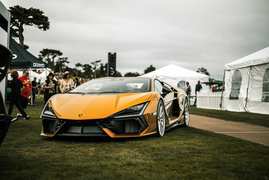
In the rapidly evolving landscape of automotive engineering, few names carry the weight and historical gravitas of Ferrari. As the industry pivots toward electrification, the Maranello-based manufacturer finds itself at a unique crossroads. While legacy automakers are scaling back their ambitious battery-electric vehicle (BEV) timelines—often citing cooling consumer interest and eroding margins—Ferrari is pressing forward with its inaugural electric supercar.
As an industry observer with a decade of experience analyzing luxury market dynamics, I have watched the “EV transition” fluctuate from hype to reality. The core challenge for Ferrari isn’t merely engineering a high-performance battery-powered machine; it is maintaining the unparalleled profitability that defines the brand in a segment where high-end electric vehicles are notoriously expensive to produce.
The Profitability Paradox of High-End EVs
The “magic number” Ferrari needs to hit isn’t just about horsepower or range—it is about sales volume versus manufacturing efficiency. For decades, legacy manufacturers have struggled to bridge the gap between internal combustion engine (ICE) margins and the high cost of raw materials, software development, and specialized battery supply chains required for EVs.
Porsche’s recent financial reports underscore this friction. In 2025, we witnessed a staggering contraction in operating profits for many high-performance legacy brands. When operating margins plummet from multi-billion dollar projections to mere millions, it serves as a wake-up call. The culprit? Significant R&D expenditure combined with tepid global demand, particularly in key markets like China, and the heavy burden of transition-related tariffs.
Ferrari, consistently holding the title of the world’s most profitable luxury brand, faces the ultimate test. Unlike mass-market manufacturers, Ferrari operates on a scarcity model. They don’t just sell cars; they manage exclusivity. For their upcoming electric supercar, currently referred to by the internal project name Luce, the strategy must remain laser-focused on that exclusivity to ensure financial health.
Defining the Magic Number: The 500–1,000 Unit Threshold
Market analysts, including those from RBC Capital, suggest that Ferrari has a specific, attainable “magic number” to make its electric transition a fiscal success. That number is remarkably modest: between 500 and 1,000 units per year.
Why is this figure significant? It aligns perfectly with Ferrari’s existing production philosophy. By limiting the volume, the company avoids the dilution of its brand value. If Ferrari can secure a consistent order book of 500 to 1,000 dedicated enthusiasts annually—people who demand the performance of a Ferrari but are willing to embrace the future of propulsion—the project becomes sustainable.
Unlike brands attempting to mass-produce EVs to compete with tech-first companies like Tesla, Ferrari is playing a different game. They are targeting a niche of high-net-worth individuals who view these vehicles as collectibles. If they can move 1,000 units, the research and development costs are amortized effectively across high-margin sales, keeping the brand’s profitability intact.
The Competitive Landscape: Is Luxury Demand Actually Failing?
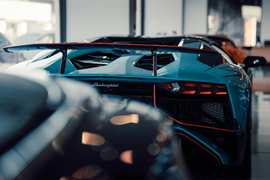
It is easy to look at the broad automotive market and assume that demand for luxury EVs is dying. CEOs from heavyweights like Rimac and Lamborghini have voiced concerns regarding the appetite for electric supercars. However, those concerns are usually rooted in the necessity for volume.
Ferrari’s advantage lies in its ability to dictate the market rather than follow it. When you own a Ferrari, you are buying into a legacy of racing and engineering perfection. If Luce delivers the visceral excitement, the sound (likely artificial or enhanced), and the handling dynamics of its ICE predecessors, the transition becomes a matter of brand loyalty rather than technological skepticism.
Strategic Implications for the Future of Automotive Luxury
For any luxury brand, the path to a successful EV launch involves navigating the “depreciation trap.” Currently, high-end electric vehicles tend to lose value faster than their combustion-powered counterparts. This is a poison pill for the luxury sector, where residual value is a cornerstone of ownership satisfaction.
To succeed, Ferrari must ensure that the software and battery technology integrated into the Luce are future-proof. Investors and potential collectors are watching to see if Ferrari can maintain its status as a hedge against market volatility. If they can prove that their electric supercar is an appreciating asset—or at least holds value like a traditional limited-edition model—they will have successfully navigated the most difficult transition in automotive history.
The Road Ahead: Why Precision Beats Scale
In 2025 and beyond, the winners in the automotive industry will not necessarily be those with the highest volume of production, but those who can maintain the best return on investment (ROI) while transitioning to greener technology. The “magic number” approach is a testament to the fact that, in the world of high-performance automobiles, luxury is rarely about mass market appeal. It is about the intersection of desire, scarcity, and technological leadership.
Ferrari’s move into the electric space is bold, but it is calculated. By aiming for that 500–1,000 unit mark, they are betting on their core strength: the ability to command the market from the top down. As the automotive industry continues to shift, it will be fascinating to see how effectively they execute this vision.
The electric revolution for supercars is no longer a matter of “if,” but “how.” With their heritage, their loyal client base, and a clear, manageable target for success, Ferrari is positioning itself to lead the electric transition on its own terms.
Are you looking to stay at the forefront of the hypercar and supercar market as these technologies evolve? Reach out to our expert team for deep-dive market analysis and gain early access to our exclusive reports on the shifting landscape of high-performance automotive investments.