
Why You Feel Sick in an Electric Vehicle: Mercedes-Benz’s Innovative Solution

If you have ever found yourself feeling dizzy or nauseated after a ride in a modern electric vehicle (EV), you are certainly not alone. As an industry veteran who has spent the last decade tracking the evolution of automotive technology, I have heard this complaint with increasing frequency. While the industry touts the benefits of silent, smooth, and rapid travel, there is a physiological reality that manufacturers are only now beginning to address: EV motion sickness. It is a genuine phenomenon, and it is finally getting the attention it deserves.
The Science Behind EV Motion Sickness
To understand why EV motion sickness occurs, we have to look at the disconnect between our sensory systems. In a traditional internal combustion engine (ICE) vehicle, the human brain relies on a symphony of cues to anticipate movement. The rumble of the engine, the subtle mechanical vibrations through the chassis, and the audible shifting of gears provide a “pre-alert” to our vestibular system—the inner ear mechanism responsible for balance.
Electric vehicles, by their very nature, strip these cues away. An EV provides instant torque, launching from a standstill with surgical precision and silence. Because there is no mechanical buildup of noise or vibration, your inner ear is caught off guard. When your eyes perceive that you are accelerating, but your inner ear hasn’t received the “warning” provided by engine noise, a sensory conflict occurs.
Furthermore, regenerative braking—a hallmark of sustainable driving technology—compounds the issue. This system abruptly slows the car to harvest energy, often creating a subtle but jerky deceleration that differs from the gradual braking patterns we have spent a century conditioning our bodies to expect. When the brain cannot reconcile what it sees with what it physically feels, the result is the familiar queasiness often associated with car sickness.
Bridging the Gap: Mercedes-Benz’s Sensory Solution
Mercedes-Benz has recognized that the future of mobility must be comfortable as well as efficient. Recently, the German automaker patented an ingenious system designed to mitigate EV motion sickness by essentially “re-educating” the passenger’s vestibular system.
The concept relies on the integration of ambient lighting and strategic airflow to provide the brain with the missing environmental cues. By utilizing hidden, high-precision vents that pulse airflow in sync with the vehicle’s acceleration and deceleration, the car provides a physical sensation that matches the car’s movement. If the vehicle accelerates, the airflow increases, signaling to the brain that movement is occurring.
Simultaneously, the vehicle’s ambient lighting—which already plays a significant role in the modern luxury car interior experience—is programmed to shift in rhythm with the car’s momentum. By subtly changing colors or patterns during speed changes, the cabin becomes an extension of the road. Effectively, the car is providing “subtitles” for the inner ear, allowing passengers to anticipate maneuvers before their bodies feel the physical G-forces.
Is This the Future of Autonomous Comfort?
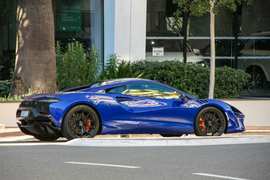
While this technology sounds like a page out of a science fiction novel, it highlights a crucial pivot in automotive engineering. As we move toward autonomous driving features and more advanced EV battery management systems, passenger comfort is becoming the new battleground for high-end manufacturers.
The cost per click (CPC) for automotive innovation remains incredibly high because the stakes are rising. Consumers are no longer just asking for better range; they are demanding a premium ride quality that justifies the switch from legacy engines. High-end automotive insurance companies and luxury vehicle leasing firms are also watching these developments closely, as occupant comfort levels directly correlate with the long-term desirability of these expensive assets.
The Growing Need for Advanced Cabin Integration
The shift toward electrification is not just about the motor; it is about the entire cabin environment. Developers are now looking into haptic feedback systems and advanced active suspension tuning to further insulate passengers from the harshness of the road while keeping them oriented.
If you own or operate a modern EV and struggle with these symptoms, there are a few practical steps you can take today:
Adjust Regenerative Braking: If your vehicle allows it, lower the intensity of the regenerative braking setting to create a smoother, more natural deceleration profile.
Focus on the Horizon: Much like preventing sea sickness, keeping your eyes on the road ahead rather than at a screen helps your brain align visual input with movement.
Optimize Cabin Temperature: Excessive heat can exacerbate feelings of nausea; keeping the cabin cool and well-ventilated is essential.
Future-Proofing Your Driving Experience
The automotive landscape is changing at a blistering pace. Whether you are interested in the latest high-performance EV drivetrain technology, researching the impact of sustainable vehicle design on passenger health, or considering an upgrade to a vehicle that prioritizes human-centric engineering, staying informed is key.
As we move closer to a fully electrified future, the integration of smart, sensory-aware technology will likely become standard in the luxury sector. We are entering an era where your car doesn’t just move you from point A to point B—it actively manages your physical well-being.
Are you looking to experience the next level of automotive comfort, or perhaps you’re interested in testing the latest models that feature advanced cabin climate and stability controls? Don’t settle for a ride that leaves you feeling less than your best. Contact your local premium dealership today to schedule a test drive and experience how the latest in electric vehicle technology is refining the passenger experience for a new generation of drivers.