
Why Electric Vehicle Motion Sickness Is Real—And How Mercedes Is Solving It

If you’ve ever climbed into a cutting-edge electric vehicle (EV) for a ride across town and felt a wave of unexpected nausea, you aren’t alone, and you certainly aren’t imagining it. While EVs are lauded for their silent, smooth, and rapid performance, they have introduced a peculiar side effect that is baffling passengers: EV motion sickness. As a veteran of the automotive industry for over a decade, I’ve tracked the evolution of cabin comfort as vehicles shift from internal combustion engines (ICE) to electric powertrains. The technology has advanced, but our biology remains rooted in the traditional sensory cues of the automotive world.
For years, we’ve relied on our senses to anticipate the physics of a vehicle. Now, manufacturers like Mercedes-Benz are finally addressing this sensory mismatch. By understanding the root causes of motion sickness in electric vehicles, we can appreciate the innovative, albeit futuristic, solutions currently in development.
The Sensory Disconnect: Why EVs Cause Nausea
To understand why EV motion sickness happens, we must look at how the human brain processes movement. Our sense of balance is governed by the vestibular system located in the inner ear. This system works in tandem with our eyes to track how our body moves through space.
In a traditional gas-powered car, your brain receives a symphony of sensory inputs. As you accelerate, the engine’s RPMs rise, the pitch of the motor changes, and subtle vibrations hum through the chassis. These cues act as a “warning system” for your brain, alerting it that kinetic energy is building. Your brain essentially receives a “heads-up” before the force of acceleration pushes you back into your seat.
In an electric vehicle, that warning system is muted. Electric motors provide near-instantaneous torque without the rising crescendo of engine noise or the mechanical vibration of a transmission. Furthermore, the regenerative braking systems in modern EVs—which capture kinetic energy to charge the battery—can induce a rapid deceleration that feels abrupt to a passenger who hasn’t been conditioned to anticipate it. When your eyes see the landscape blur but your inner ear detects an absence of traditional “mechanical” cues, a sensory mismatch occurs. The brain struggles to synchronize the inputs, leading to the physiological distress we identify as motion sickness.
Bridging the Gap: Mercedes’ Innovative Approach
The automotive industry is no stranger to advanced engineering, but solving for human physiology requires a new design philosophy. Mercedes-Benz has recently filed patents for a sophisticated system designed to mitigate these symptoms through sensory stimulation. Rather than modifying the powertrain, they are focusing on the cabin environment.
The solution centers on a concept akin to “sensory feedback.” The patented system utilizes active airflow and ambient lighting to provide the brain with the missing spatial information it needs.
Leveraging Airflow and Ambient Lighting
The system uses hidden HVAC vents to adjust cabin airflow in real-time. When the vehicle begins to accelerate, the system increases airflow intensity, subtly signaling to the passenger that movement is occurring. Conversely, as the vehicle enters a regenerative braking phase or slows down, the airflow eases.
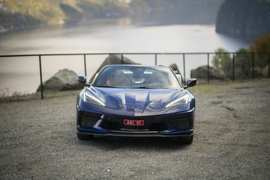
In addition to thermal and tactile cues, Mercedes is exploring the use of dynamic ambient lighting. By adjusting the intensity and color temperature of the interior LED strips, the car can mimic the natural “flow” of the environment. If the car accelerates, the lighting patterns shift to provide a visual anchor that correlates with the physical sensation of G-force. Think of these interventions as “subtitles for your inner ear”—they bridge the gap between what you feel and what your brain expects to perceive.
High-Performance Engineering and the Future of Comfort
While these patent filings represent a significant leap in automotive ergonomics, implementing them in production vehicles presents technical challenges. Achieving the desired effect requires a tight integration of sensors, high-speed software processing, and climate control hardware.
We are seeing a trend where premium manufacturers are prioritizing passenger well-being as much as raw speed or battery efficiency. High-CPC (Cost Per Click) sectors in the automotive market, such as autonomous driving software and advanced interior luxury, are heavily investing in these human-centric interfaces. As we move toward 2026 and beyond, EV motion sickness will likely be mitigated not just by hardware, but by advanced AI that learns a driver’s specific habits to provide personalized, anticipatory comfort.
The Broader Impact on the EV Market
As electric vehicle adoption grows globally, from urban mobility to luxury transport, the focus on interior comfort has never been higher. When we talk about the “EV experience,” we are moving beyond just range and charging speeds—we are talking about the quality of the journey.
If you own an electric vehicle and occasionally feel unsettled on longer trips, you aren’t alone. It is a common symptom of a transition between mechanical eras. The next generation of vehicles will likely integrate these “anti-nausea” systems as standard luxury features, similar to how we now take adaptive cruise control for granted.
Whether you are looking for the latest in EV interior technology or simply trying to optimize your current vehicle for long-distance comfort, the future of the automotive industry is clearly leaning toward a more intuitive, user-friendly experience.
Take the Next Step Toward a Better Drive
Technology is rapidly evolving to make your time on the road more enjoyable and comfortable than ever before. If you’re interested in keeping up with the latest advancements in electric vehicle innovation, high-end automotive design, and groundbreaking cabin technology, stay tuned to our ongoing series.

We provide the expert insights you need to stay ahead of the curve. If you’re ready to experience the next level of driving comfort, consider booking a test drive in the latest luxury EV models or subscribing to our newsletter for exclusive updates on the tech that is shaping the future of transportation. Your perfect, nausea-free drive is just around the corner—let us help you find it.