

Understanding and Resolving Motion Sickness in Electric Vehicles: The Mercedes Approach
If you have ever found yourself feeling dizzy, nauseated, or generally unwell while riding in a modern electric vehicle (EV), rest assured that you are not imagining things. As someone who has spent over a decade analyzing automotive trends and test-driving the latest innovations in battery-electric technology, I have seen this phenomenon evolve from a niche complaint into a primary focal point for luxury manufacturers. The transition toward electrification is fundamentally changing how we experience movement, and for many, this shift triggers a specific form of discomfort. Fortunately, industry leaders like Mercedes-Benz are now actively developing technology to combat EV-induced motion sickness.
The Science Behind the Mismatch
The primary culprit behind why you might feel sick while you’re in an EV boils down to a physiological “sensory conflict.” In a traditional internal combustion engine (ICE) vehicle, your brain receives a symphony of sensory data: the audible roar of the engine, the vibrations through the chassis during acceleration, and the rhythmic shifting of gears. These are physical cues that “prime” your inner ear and your nervous system to expect movement.
Electric vehicles, by design, are remarkably quiet and smooth. Because electric motors provide instantaneous torque, acceleration is seamless, bypassing the mechanical cues your brain uses to predict force. Furthermore, regenerative braking—a process that converts kinetic energy back into battery charge—creates rapid, linear deceleration that occurs without the traditional “coasting” sensation one expects from a gas-powered car. When your eyes see the road moving past, but your vestibular system (located in the inner ear) receives conflicting data due to the lack of mechanical vibration and noise, the result is often motion sickness.
Why EVs Feel Different
In my decade of experience, I have found that passengers are significantly more prone to these symptoms in high-performance EVs. Without the auditory “lag” that signals the start of acceleration, the body is caught off guard. Researchers at the Université de Technologie de Belfort-Montbéliard have confirmed that the brain struggles to anticipate physical forces when those traditional environmental cues are stripped away. As EVs continue to gain market share, solving this passenger discomfort has become a top priority for automotive engineers aiming to improve the overall vehicle ownership experience.
Mercedes-Benz: Pioneering a Sensory Solution
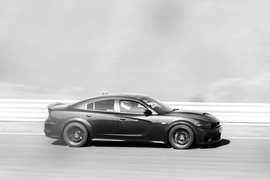
Recognizing that the “silent speed” of electric mobility can be a double-edged sword, Mercedes-Benz has patented an innovative, high-tech solution designed to harmonize the cabin environment with the vehicle’s movement. Rather than relying on traditional mechanical adjustments, they are looking toward a multisensory integration system that acts as a bridge between the car’s movement and the passenger’s perception.
The proposed system utilizes a combination of ambient airflow and dynamic lighting to provide the brain with the missing “cues.” In theory, when the vehicle accelerates, the cabin’s climate control system would adjust airflow through hidden vents to match the intensity of the force, providing a physical sensation that correlates with the speed. Simultaneously, the interior ambient lighting—which has become a staple of modern high-end vehicle interiors—would shift in intensity or pattern to mirror the vehicle’s velocity and direction.
By creating a visual and haptic “subtitle” for what the car is doing, Mercedes aims to keep the vestibular system informed. This is not just a luxury feature; it is an ergonomic necessity as we transition into an era of more efficient, powerful, and whisper-quiet electric transport.
The Future of EV Comfort and Technology
While patents for such systems do not always reach the production line immediately, they highlight a massive shift in automotive design. Manufacturers are no longer just focused on raw range or horsepower; they are looking at the human-machine interface. As we look ahead to 2026 and beyond, the expectation for high-end vehicle interior comfort is rising.
For potential buyers, the evolution of these systems could be a deciding factor. If you are currently shopping for a luxury electric car but are concerned about ride quality or nausea, keep an eye on upcoming advancements in active comfort technology. The industry is rapidly learning that the best electric vehicle is not just the one that travels the furthest, but the one that makes every passenger feel the most secure and comfortable during the journey.
Investing in Your Automotive Future
As we navigate this shift in engineering, it is clear that we are entering a golden age of personalization. Whether you are interested in the latest electric SUVs or considering high-end luxury alternatives, the focus is moving toward technology that adapts to you, not the other way around.
Are you looking to upgrade to a vehicle that balances performance with unparalleled passenger comfort? If you’re interested in exploring how current electric vehicle technology can fit your lifestyle, or if you want to stay updated on the most reliable, comfortable, and cutting-edge models arriving in the showroom this year, I invite you to reach out. Let’s discuss which vehicle perfectly matches your needs for safety, performance, and comfort. Contact our experts today to schedule a test drive and experience the future of driving for yourself.