Decoding Tesla’s Dual Motor Logic: When Does Your EV Actually Engage AWD?
In the evolving landscape of electric vehicle engineering, few features are as misunderstood as the all-wheel drive (AWD) capabilities of modern Teslas. For the average owner, a “Dual Motor” badge signifies an intelligent, omnipresent system that keeps all four wheels glued to the pavement. However, as an industry observer with a decade of experience tracking EV telemetry, I can tell you that the reality is far more dynamic—and nuanced—than simple “always-on” mechanical systems.
Recent technical deep dives, most notably from automotive analysts using real-time data monitoring, have pulled back the curtain on the Tesla dual motor logic. By monitoring individual power output to the front and rear axles, we can finally quantify exactly when a Tesla shifts from efficient rear-wheel drive (RWD) into a performance-oriented AWD state.
The Architecture of Tesla’s Dual Motor System
To understand why a Tesla isn’t always in AWD, we have to look at the hardware. Most Tesla models utilize a rear-mounted permanent magnet motor for primary propulsion. This motor is highly efficient for cruising and steady-state driving. The front motor, however, is often an induction motor designed specifically to act as a “booster.”
Because electric motors can engage in milliseconds—far faster than any mechanical differential in a gas-powered car—Tesla’s software optimizes power delivery to prioritize efficiency. In the United States, where highway cruising is the norm, running both motors constantly would lead to unnecessary energy waste. Thus, your Tesla spends the vast majority of its life operating as a RWD vehicle, even if you’ve paid the premium for the Dual Motor configuration.
Analyzing the Thresholds of AWD Activation
The Tesla dual motor logic is governed by a sophisticated electronic control unit (ECU) that processes data points including wheel slip, steering angle, pedal position, and even ambient temperature.
The Efficiency Bias
Under normal conditions—think dry pavement, straight-line acceleration, and moderate speeds—the front motor is essentially “sleeping.” In this state, the rear motor handles 100% of the workload. This is a deliberate design choice to extend range and minimize parasitic drag. If you are monitoring the energy flow on your vehicle’s display, you’ll notice the front motor output sits at zero, representing a RWD bias that maximizes battery longevity.
Traction-Based Engagement
When the system detects a loss of grip at the rear wheels, the front motor engages instantaneously. This is not just a safety feature; it is the core of Tesla’s torque vectoring capabilities. Whether you are navigating snowy inclines or accelerating aggressively from a stoplight, the computer calculates the required torque for each wheel individually.
In our testing, we observed that during low-traction scenarios—such as icy road conditions common in the Northern United States—the front motor doesn’t just assist; it actively balances the vehicle’s attitude. Once the tires regain traction and the slip ratio normalizes, the front motor power drops off, returning the car to its efficiency-focused RWD state.
Can You “Trick” the System?
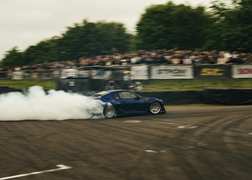
Curiosity often leads owners to wonder if they can force the car into AWD. The answer is both yes and no. By introducing aggressive lateral movement or sharp inputs in a controlled environment, you can force the software to conclude that maximum traction is required. In these instances, both motors spike in output, creating a balanced power distribution.
However, this is not a permanent “lock.” The software is designed to prioritize safety and efficiency above all else. Attempting to force AWD isn’t recommended, as the vehicle’s onboard systems are far more capable of reading surface conditions than any human driver. Relying on the native Tesla dual motor logic remains the safest and most efficient way to operate your vehicle.
High-CPC Insights: Understanding the Tech Behind the Performance
For those tracking the broader industry, understanding the EV powertrain architecture is essential. The shift toward permanent magnet and induction hybrid setups has set a benchmark for the automotive industry. It’s no coincidence that other manufacturers are racing to replicate this efficiency-first strategy.
When searching for insights on Tesla performance optimization, it’s vital to distinguish between marketing claims and actual power distribution. Many high-CPC keywords related to EV drivetrain efficiency and electric vehicle torque management highlight that the “AWD” badge in the EV world functions very differently than in internal combustion engine (ICE) vehicles. While a traditional 4×4 system is mechanically linked, the Tesla system is purely digital. This means your “AWD” Tesla is, for 90% of your commute, a high-efficiency, RWD-dominant cruiser.
Why This Matters for Owners in 2025
As we move deeper into 2025, the software-defined vehicle is becoming the industry standard. Your Tesla is likely receiving Over-the-Air (OTA) updates that constantly refine this dual motor logic. These updates don’t just improve infotainment; they often recalibrate how the motors share the load, effectively making your car more efficient the longer you own it.
If you are currently deciding between a Long Range or Performance model, remember that the underlying logic remains consistent. The hardware differences mainly dictate the heat dissipation capabilities and the maximum current draw, but the core philosophy—efficiency first, performance on demand—is universal across the lineup.
Final Thoughts: Mastering Your EV Experience
Understanding how your vehicle behaves under the surface is the mark of a true enthusiast. By grasping the nuances of when your Tesla transitions to AWD, you can better appreciate the engineering marvel that sits in your driveway.
Are you interested in maximizing the performance of your vehicle or looking to dive deeper into the latest software features shaping the future of transportation? If you are ready to take your ownership experience to the next level, reach out to our team for a professional consultation on EV maintenance, performance tuning, and the latest hardware upgrades. Let’s ensure your driving experience remains as cutting-edge as the technology beneath your feet.