The Architecture of Obsession: Managing a Massive Car Collection
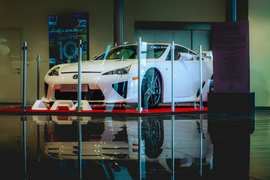
For the automotive enthusiast, the “dream garage” is the ultimate North Star. We have all spent idle moments daydreaming about the perfect hangar—a space housing the quintessential hits of our youth, paired with rare, bespoke metal that has never seen a public showroom floor. Whether you envision a minimalist sanctuary for high-end aesthetic appreciation or a bustling, multi-generational social hub complete with a glass-walled office and tax-sheltered logistics, the fantasy of a massive car collection is undeniably seductive.
However, the transition from “enthusiast” to “curator” brings a harsh set of physical and financial realities. As someone who has spent over a decade navigating the professional side of automotive storage and management, I can tell you that the gap between the dream and the reality is defined by one relentless factor: the intersection of space and time.
The Evolution of the Collector
Most of us start in the shallow end. Perhaps it’s a dedicated home garage housing a reliable daily driver alongside a weekend sports car. As the collection grows to three, four, or six vehicles, the reality of ownership shifts from a hobby to a logistical challenge. Suddenly, you aren’t just an owner; you are a facility manager.
If you don’t possess a massive warehouse or the skill set to act as your own mechanic, the costs of maintaining that fleet in a pristine state climb rapidly. In hyper-expensive markets like Los Angeles, premium storage and professional maintenance for a single high-performance vehicle can easily run between $10,000 and $15,000 annually. When you reach the double digits, you aren’t just paying for rent; you are paying for an ecosystem of preservation.
Scaling the Operation: The Business of Passion
Once a collection exceeds ten cars, the project demands a professional infrastructure. This is where many enthusiasts find themselves in a precarious position. You no longer have the time to perform basic fluid checks, battery rotations, or fuel system maintenance. This is the realm of the automotive asset management expert—a specialized field that treats high-value vehicles with the same rigor as an art portfolio.
Take, for instance, Matthew Katz’s “Caretakers Collection.” With a roster exceeding 70 unique vehicles, Katz’s operation is effectively a private museum. By housing his collection in large hangars and stacking vehicles to optimize vertical space, he has solved the primary hurdle of real estate. Yet, the secondary hurdle remains: human capital.
Managing a collection of this size is a full-time, high-stakes career. It involves constant communication, meticulous documentation via cloud-based inventory systems, and, most importantly, a dedicated mechanic who acts as the heartbeat of the operation. Without a professional who can perform “in-house” repairs, a collection of 70 cars becomes a collection of 70 expensive statues, depreciating rapidly as seals dry out and mechanical systems seize.
The Real Cost of Ownership
If you are wondering about the math, the industry standard for a top-tier collection is roughly $10,000 per car, per year. For a 70-car fleet, that translates into an annual operating budget nearing three-quarters of a million dollars. This figure covers:

Climate-Controlled Storage: Essential for protecting sensitive paint, leather, and electronic components.
Professional Maintenance: Regular engine run-cycles, fluid changes, and mechanical inspections to ensure “turn-key” readiness.
Logistics: The cost of transport for shows, restorations, and regional relocations.
Insurance: Specialized coverage for high-value and rare assets.
Many new collectors underestimate the “idle penalty.” The moment a vehicle sits stagnant, maintenance costs actually rise. Components like fuel pumps, gaskets, and tires deteriorate faster when a car is ignored than when it is driven. A professional management team ensures that every road-legal vehicle is driven on a rotating schedule, maintaining its mechanical integrity through use rather than neglect.
The Paradox of Choice
Even when you have the capital, the space, and the best mechanical support, the “time” component remains unyielding. Many collectors, despite owning an array of incredible machinery—from limited-run Porsche GT models to experimental one-offs—find that they lack the time to actually pilot their own fleet.
Katz, who often manages his collection from afar while navigating the demands of his career and family life, highlights the inherent irony of the hobby: he can realistically drive only a handful of his cars each week. To cycle through the entire collection would take months. Consequently, the role of a professional collection manager becomes essential. They are the ones who ensure that the right car is ready at the right time, fueling the car and checking the systems so the owner can enjoy the driving experience without the “storage stress.”
Defining Your Legacy
Owning a massive car collection is not merely about acquisition; it is about stewardship. Whether you are dealing with a historic Ferrari F40 or a quirky, one-of-a-kind design study, you are effectively a curator of automotive history. The challenge lies in finding the balance between growth and sustainability.
If you find yourself dreaming of a multi-car warehouse, remember that the most successful collectors are not those who simply buy the most metal, but those who build a system—or a team—that allows them to interact with their vehicles on their own terms. It requires a blend of professional-grade organization and a genuine, infectious love for the engineering behind the machines.
Ultimately, the goal of any collection is the preservation of the driving experience. If your garage is starting to feel like a liability rather than a dream, it may be time to professionalize your logistics or streamline your inventory.

Are you ready to take the next step in professionalizing your automotive investments? Whether you need guidance on climate-controlled storage solutions, concierge mechanical maintenance, or optimizing your collection’s logistics, contact our expert team today to ensure your fleet remains in peak, show-ready condition.