
The Strategic Math Behind Ferrari’s Electric Supercar Ambitions

In the high-stakes world of automotive luxury, Ferrari has never been one to follow the herd. While many global automakers are currently hitting the brakes on their aggressive electrification roadmaps, Maranello remains steadfast in its commitment to launching a flagship electric supercar. This decision arrives during a precarious transitional period for the industry, where electric vehicle (EV) adoption rates are surging globally, yet the demand for ultra-premium, high-performance EVs appears remarkably soft. As the luxury sector grapples with these conflicting market signals, industry analysts are beginning to pinpoint the exact metrics Ferrari must hit to ensure their electrification strategy remains as profitable as their legendary combustion-engine heritage.
The Profitability Paradox in Premium Electrification
For a decade, I have observed how legacy manufacturers struggle to transition their complex production architectures to battery-electric platforms. The primary friction point today is profitability. Unlike mass-market brands, luxury powerhouses like Porsche have faced significant headwinds; recent financial disclosures highlight a staggering contraction in operating profits—plummeting from €4 billion to a mere €40 million in a nine-month period. While geopolitical tariffs and cooling demand in the Chinese market are factors, the “EV tax” on manufacturing remains the silent killer of margins.
Building an electric supercar is fundamentally more expensive than engineering a traditional V8 or V12 powerhouse. When you factor in the research and development of proprietary battery chemistry and the loss of the “brand premium” typically associated with mechanical engine complexity, many luxury brands find themselves losing money on every unit that rolls off the assembly line. This creates a challenging paradox for Ferrari: how to maintain their status as the world’s most profitable luxury brand while navigating an unproven segment?
The “Magic Number”: Defining Success for the Ferrari EV
The answer, according to RBC Capital analyst Tom Narayan, lies in a strategic volume target. In recent discussions with industry leadership, it has become clear that the demand for high-end EVs is not merely a question of technology, but one of market penetration within a very narrow, affluent demographic. Ferrari does not need to sell tens of thousands of units to make their upcoming “Luce” electric supercar a success.
The magic number suggested for Ferrari is to capture between 500 and 1,000 customers per year.
For a brand with Ferrari’s global prestige and an exceptionally loyal client base, securing 500 to 1,000 buyers annually for a revolutionary electric model is not a Herculean task—it is a calculated business objective. By keeping production volumes strictly limited, Ferrari can maintain the scarcity that drives their brand value while simultaneously insulating themselves from the volatile demand cycles currently plaguing wider EV manufacturers. This approach allows them to treat the electric supercar not as a volume-driven product, but as a specialized, high-margin offering that justifies its premium price point.
Why Legacy Luxury Brands Are Hesitating
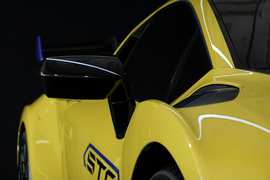
The skepticism shared by CEOs like Mate Rimac and Lamborghini’s Stephan Winkelmann regarding luxury EV demand is rooted in the “driving experience” gap. Luxury buyers are not merely purchasing transportation; they are buying an emotional connection. The roar of a naturally aspirated engine is, for many, the primary catalyst for the purchase. To succeed, Ferrari’s electric platform must overcome the sensory hurdle, proving that it can deliver the same adrenaline-fueled performance as its internal combustion counterparts.
This is why Ferrari’s move is so bold. They are not merely launching an EV to satisfy environmental regulations; they are attempting to define the next generation of performance. If they succeed in attracting that core group of 500 to 1,000 buyers annually, they will have successfully bridged the gap between traditional automotive passion and the unavoidable shift toward electrification.
Lessons from the EV Marketplace: The Cybertruck Volatility
The importance of managing expectations and demand is further illustrated by the recent trajectory of the Tesla Cybertruck. When Tesla introduced a more accessible $59,990 variant of their futuristic pickup, the market response was immediate and overwhelming. However, the subsequent friction—caused by sudden shifts in Full Self-Driving (FSD) transfer policies and ballooning delivery timelines—transformed a moment of high demand into a public relations headache.
The lesson here for any manufacturer, including Ferrari, is that demand in the electric space is fragile. It is predicated on perceived value, price stability, and a seamless customer experience. Ferrari’s advantage lies in their exclusivity; by avoiding the “mass market” trap that Tesla often maneuvers through, they can maintain a level of control over their delivery cycles and client expectations that other, more volume-heavy brands simply cannot replicate.
Looking Toward the Future of High-Performance Motoring
As we move further into 2026, the automotive industry will be watching Maranello closely. Ferrari is betting that they can maintain their record-breaking profit margins by leaning into their heritage of exclusivity rather than chasing the sheer volume of the broader EV market.
By focusing on that “magic number” of 500–1,000 units, Ferrari is signaling that they are not interested in the race to the bottom of the electric pricing war. Instead, they are positioning themselves to dominate a niche segment where performance, brand cachet, and technological innovation converge.
The road ahead is complex, but for an automaker that has defined the very concept of the supercar for decades, the transition to electric propulsion is just the latest chapter in a long history of evolution. Whether the Luce will become the benchmark for electric performance remains to be seen, but the strategy is sound: keep the numbers small, keep the margins high, and never compromise the exclusivity that makes a Ferrari a Ferrari.
If you are tracking the evolution of the luxury automotive market and want to see how these strategic shifts will impact the future of high-performance vehicles, ensure you are staying updated on the latest breakthroughs in hypercar engineering and luxury asset investments. Reach out to our team of specialists today to discuss how the shifting automotive landscape could influence your next luxury acquisition.