
Why You Feel Sick in an Electric Vehicle: Mercedes-Benz and the Future of In-Car Comfort
For over a decade, I’ve tracked the evolution of automotive engineering, from the roar of high-performance V12 engines to the eerie, silent surge of modern battery-electric vehicles (BEVs). As someone who has spent thousands of hours behind the wheel—and in the passenger seat—of everything from entry-level sedans to million-dollar hypercars, I’ve noticed a recurring trend: EV motion sickness is becoming a significant issue for passengers.
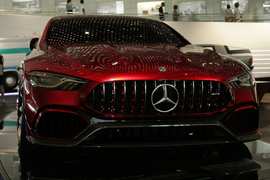
It isn’t just in your head. As electric vehicles redefine our driving experience, they are inadvertently clashing with our biological systems. Fortunately, automotive giants like Mercedes-Benz are finally stepping in with innovative solutions to curb this rising discomfort. If you’ve ever felt nauseated while riding in a Tesla, Rivian, or an EQ-series Mercedes, here is the science behind it and how manufacturers plan to fix it.
The Physics of EV Motion Sickness
To understand why EV motion sickness occurs, we have to look at the disconnect between our eyes and our inner ears. In a conventional internal combustion engine (ICE) vehicle, the driving process is sensory-rich. As the driver accelerates, the engine revs rise, creating an auditory “warning” for the brain. The subtle vibrations, the slight lag in torque delivery, and the visceral gear shifts all serve as environmental cues. Your brain uses these signals to predict what the car will do next.
Electric vehicles, by design, remove these cues. You get instant, linear torque. The acceleration is often aggressive, yet the cabin remains tomb-like in its silence. When you add the aggressive nature of regenerative braking—which slows the car down significantly the moment you lift your foot off the accelerator—you create a “jerky” physical experience that the human vestibular system isn’t evolved to handle.
Your eyes look out the window and perceive rapid movement, but because the ride is so smooth and vibration-free, your inner ear struggles to harmonize with the visual input. This sensory mismatch—a classic trigger for motion sickness—is essentially your brain trying to solve an equation that it doesn’t have the data for.
Mercedes-Benz’s High-Tech Intervention
Recognizing that EV motion sickness could potentially hinder the adoption of high-end electric luxury vehicles, Mercedes-Benz has filed patents for a sensory-integration system designed to re-sync your brain with the vehicle’s movement.
This isn’t just about soft suspension tuning; it’s a form of multisensory communication. The proposed system utilizes hidden airflow vents and ambient cabin lighting to act as “subtitles” for your inner ear. Here’s how it works:
Dynamic Airflow: When the car accelerates, the system increases subtle, directed airflow into the cabin. When the car decelerates or brakes, the airflow is adjusted to mirror the deceleration. This provides a tactile cue that aligns with the speed change, helping the passenger’s vestibular system “feel” the impending movement.
Visual Synchronization: Interior ambient lighting—a hallmark of Mercedes design—is expected to pulse or shift in color temperature in harmony with the vehicle’s dynamic forces. By providing a peripheral visual anchor that matches the car’s physical movement, the system aims to reduce the sensory conflict that leads to nausea.
While this may sound like science fiction, it represents a massive leap in automotive comfort technology. For luxury car buyers, the cabin experience is just as important as the performance metrics. If you are shopping for a new vehicle and suffer from sensitivity to motion, keep an eye on these developments; they are likely to be standard in the next generation of premium EVs.
The Role of Regenerative Braking and Driver Habits
Beyond vehicle engineering, it is important to address how driving style impacts EV motion sickness. Many new EV owners are unaccustomed to “one-pedal driving.” When a driver lifts their foot entirely off the accelerator, the regenerative braking kicks in with significant force, causing the vehicle to nose-dive slightly.
As an industry expert, I often advise that the best way to avoid passenger nausea is to smooth out the inputs. Even if you aren’t waiting for a Mercedes-Benz update, you can improve the ride quality by:
Modulating the accelerator: Don’t treat the pedal like an on/off switch.
Adjusting Regen Settings: Many EVs allow you to lower the regenerative braking intensity in the vehicle settings, which creates a more “coasted” feel similar to a gas-powered car.
Encouraging Forward Focus: Passengers should avoid looking at screens or reading books, which drastically increases the likelihood of nausea in high-torque environments.
The Future of Automotive Comfort and Connectivity
As we look toward 2026 and beyond, the integration of smart cabin features will become a primary battleground for luxury manufacturers. We are seeing a shift from traditional mechanical engineering to software-defined vehicles where the comfort of the passenger is monitored by AI.
Whether it is through haptic feedback seats or the sophisticated light-and-air systems being pioneered by Mercedes-Benz, the industry is finally waking up to the fact that performance is meaningless if your passengers feel ill.
Why Sustainability Drives Innovation
Interestingly, the same desire to innovate for a cleaner future—which gave us the electric powertrain—is now forcing manufacturers to rethink the human element. Just as we see in the development of hybrid superyachts that combine massive speed with silent, emission-free cruising, the auto industry is learning that efficiency and luxury must coexist.
If you are currently researching your next vehicle, consider the “passenger experience” as a critical KPI. The cost of ownership for a high-end EV often includes these advanced comfort systems that make long-distance travel significantly more enjoyable.
Take the Next Step
Are you curious if your current vehicle is optimized for maximum passenger comfort, or are you looking to upgrade to an EV that prioritizes a nausea-free ride?
Don’t let motion sickness dictate your driving experience. Visit your local dealership this weekend for a test drive, and pay close attention to how the regenerative braking and cabin environment make you feel during rapid transitions. If you’re ready to explore the latest in luxury electric mobility, reach out to our team today for a curated list of vehicles that prioritize both performance and passenger well-being. Let’s get you into the seat that matches your lifestyle perfectly.