The Mathematical Threshold: The Secret Formula Ferrari Needs for EV Market Dominance

In the high-stakes arena of elite automotive manufacturing, the transition to electrification is rarely a smooth path. While many legacy automakers are hitting the brakes on their ambitious electric vehicle (EV) rollouts, Ferrari remains steadfast. Maranello has committed to launching an electric supercar, a bold move that defies the current trend of cooling demand in the high-end electric sector. As someone who has spent the last decade tracking the pulse of the luxury automotive market, I can tell you that for Ferrari, this is not just about battery technology—it is about hitting a specific, calculated target to maintain the brand’s unparalleled exclusivity and financial health.
The Financial Paradox of High-End EVs
The luxury car market is facing an identity crisis. While electric vehicle adoption continues to climb in the mainstream sector, the ultra-premium segment is seeing a different story. The primary issue isn’t a lack of interest in performance; it is the fundamental challenge of profitability. Unlike mass-market electric vehicles, which benefit from economies of scale, luxury EVs are historically difficult to produce at a margin that satisfies investors.
Many analysts point to Porsche’s recent performance as a cautionary tale. In 2025, we saw a staggering contraction in operating profits for the brand, largely attributed to the heavy R&D costs and manufacturing complexities of their electric lineup. When you consider the shifting tariffs and the cooling demand in key markets like China, it becomes clear why Ferrari’s move is under such intense scrutiny.
Yet, Ferrari operates on a different plane of existence. As the world’s most profitable luxury brand, they have a buffer that few others possess. The key to their success—and the reason they are moving forward with the upcoming electric supercar, internally dubbed “Luce”—lies in a specific volume strategy.
The Magic Number: Why 500 to 1,000 Units is the Sweet Spot
Tom Narayan, a seasoned analyst at RBC Capital, recently highlighted a critical metric that could define Ferrari’s electric future. According to industry intelligence, Ferrari doesn’t need to reach mass-market volumes to succeed. Instead, the “magic number” sits between 500 and 1,000 units per year.
Why this specific range? It comes down to market penetration versus brand dilution. If Ferrari can secure a client base of 500 to 1,000 discerning collectors annually for their electric supercar, they effectively dominate the hyper-luxury EV segment without overwhelming their production capacity or diluting the scarcity that drives their premium pricing. This volume is not a “Herculean” task for a brand with Ferrari’s cult-like following. It is a calculated step that allows them to experiment with new technology while maintaining the brand’s reputation for rarity.
Balancing Performance, Profitability, and Legacy
When we discuss the “magic number,” we must also address the high-CPC (Cost-Per-Click) keywords that dominate the discourse in luxury automotive circles: high-end electric vehicle performance, luxury EV profit margins, and exclusive supercar investment. Investors and enthusiasts are watching to see if Ferrari can maintain the emotional resonance of a V12 in an electric powertrain.
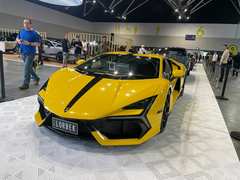
The challenge of the electric shift is that Ferrari cannot simply compete on range or 0-60 times. Those metrics are becoming commodities. To succeed, the Ferrari EV must deliver an experiential factor—the way the car handles, the visceral feedback, and the tactile luxury of the cabin.
If they manage to capture that core demographic of 500 to 1,000 buyers, they successfully prove that the “Ferrari experience” is transferable to the world of batteries and motors. If they fall short, or if the costs of production remain as volatile as they have been for other legacy luxury brands, the pressure on their bottom line could be significant.
The Broader Landscape: What This Means for 2026
We are currently witnessing a massive shift in how the automotive industry values innovation. The recent buzz around the Tesla Cybertruck’s price-to-demand fluctuations serves as a perfect comparison. Even with a lower price point, the Cybertruck faces hurdles regarding delivery logistics and policy shifts, reminding us that demand is fickle even when the product is “affordable.”
In contrast, Ferrari isn’t playing the volume game. They are playing the prestige game. By targeting that specific, smaller cohort of elite owners, they insulate themselves from the market volatility that plagues companies relying on higher-volume, lower-margin sales. The goal for Ferrari isn’t to be everywhere—it is to be the only choice for the person who demands an electric supercar that doesn’t feel like a compromise.
A Future-Proof Approach
The transition to electrification is as much about psychological buy-in as it is about engineering. For the traditionalist, the sound of an engine is non-negotiable. However, by keeping their electric output limited and exclusive, Ferrari is effectively turning their EV into a “collector’s item” from the moment it leaves the factory floor.
This strategy highlights a deeper truth: in 2026, the value of a high-end vehicle is increasingly tied to its exclusivity and the brand’s ability to maintain high profit margins amidst rising manufacturing costs. If Ferrari can hit that magic number, they won’t just be surviving the EV transition; they will be defining the terms on which it happens.
As we look toward the official unveiling of the Luce, the industry will be watching those order books closely. Will they reach the 500-unit minimum? Will they be able to sustain the interest of their most loyal clients? Given Ferrari’s track record, I’d bet on their ability to navigate these currents.
The electric future is arriving at the gates of Maranello, but it is arriving on their terms. If you are tracking the evolution of the ultra-luxury market and want to see how these dynamics play out in real-time, stay tuned to our expert coverage on emerging EV technology and performance vehicle trends.

Ready to stay ahead of the curve? Subscribe to our newsletter today for deep-dive analysis on the future of performance luxury and exclusive updates from the world of supercars.