
The Ferrari Electric Supercar Strategy: Decoding the Magic Number for Success
The landscape of high-performance automotive manufacturing is currently undergoing its most significant shift since the internal combustion engine first roared to life. While legacy brands and emerging tech-forward manufacturers alike are hitting the brakes on ambitious electric vehicle (EV) rollouts due to shifting market sentiment, Ferrari is moving forward with calculated precision. As an industry analyst who has spent a decade monitoring the intersection of luxury automotive trends and electrification, I find Ferrari’s trajectory not just bold, but fundamentally different from the rest of the pack.

The core question isn’t whether Ferrari can build an electric supercar; it’s whether they can achieve the specific financial and production milestones required to maintain their status as the world’s most profitable luxury brand. According to recent market analysis, particularly insights from RBC Capital’s Tom Narayan, there is a “magic number” Ferrari must hit to ensure their upcoming electric supercar—internally referred to as “Luce”—solidifies their dominance in the age of electrification.
The Profitability Paradox in High-End EVs
For years, the automotive narrative was centered on range anxiety and charging infrastructure. By 2025, those concerns have largely been mitigated by hardware advancements. The new, more pressing narrative is the “profitability paradox.” While mass-market EV adoption continues to climb, the high-end, bespoke segment is facing a reckoning.
Many manufacturers are discovering that the engineering costs associated with high-performance EVs—battery weight management, bespoke cooling systems, and software integration—are eating into margins that were once fat and predictable. Look at the recent performance of competitors like Porsche, which faced significant operating profit challenges in the first three quarters of 2025. When a titan of the industry sees a near-total compression of operating profits, it sends a clear signal: electric vehicles are not automatically a golden ticket to success.
Ferrari, however, operates under a different set of physics. With an industry-leading ability to command high premiums and maintain scarcity, they are uniquely positioned. The challenge, however, remains the same: scaling an EV project without diluting the brand’s exclusivity or suffering the heavy margin losses that have plagued other premium manufacturers.
The Magic Number: Striking the Balance
The “magic number” suggested for Ferrari is surprisingly modest by industry standards: 500 to 1,000 units per year.
To the average observer, this might seem like a small figure, but for a boutique manufacturer, it is a strategic masterstroke. By targeting this specific volume, Ferrari ensures several critical things:
Exclusivity: By keeping the production run limited to this bracket, they preserve the “Ferrari mystique.” Demand will naturally outstrip supply, maintaining the resale values that define the brand.
Operational Efficiency: Producing between 500 and 1,000 units allows Ferrari to refine their manufacturing processes without the overhead of massive, inefficient assembly lines. This is the sweet spot for maintaining a high ROI on R&D costs.
Market Penetration: If Ferrari can secure a roster of 1,000 annual buyers for their electric supercar, they successfully capture the high-end electric segment without needing to pivot their entire company identity toward mass-market batteries.
Navigating the Volatile Luxury EV Market
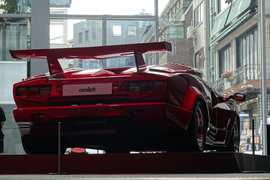
The luxury sector is not immune to broader economic headwinds. High-profile voices, from Rimac to Lamborghini, have noted that the appetite for high-performance electric vehicles is not as insatiable as once predicted. Yet, Ferrari’s decision to move forward suggests a level of confidence in their loyal customer base.
The success of the Ferrari electric supercar will depend on more than just the “magic number” of production units. It will depend on the brand’s ability to imbue the electric powertrain with the “emotional performance” drivers expect from Maranello. We aren’t just talking about zero-to-sixty times; we are talking about sound engineering, chassis dynamics, and the visceral engagement that makes a Ferrari a Ferrari.
Why Legacy Brands are Struggling with Electric Transitions
The struggle for legacy brands to transition to electric power is often rooted in the “sunk cost” fallacy regarding their internal combustion engine (ICE) facilities. Converting legacy plants is expensive, and managing the dual-stream production of hybrid and electric vehicles creates a logistical nightmare.
Ferrari’s approach, which emphasizes a hybrid-first philosophy leading into a highly curated electric supercar release, avoids the pitfalls of jumping headfirst into a volatile market. They aren’t reacting to a trend; they are curating a transition. By aiming for that 500–1,000 unit threshold, they are building a bridge to the future without burning the bridges of their past performance heritage.
The Path Forward for Luxury Automotive Investment
For investors and enthusiasts alike, the coming 24 months are critical. We are watching the industry stabilize. As we see a spike in demand for niche, high-performance EVs, it is clear that the consumer wants innovation, but they demand it with the pedigree of a established manufacturer.
If Ferrari reaches this magic number, it will provide a blueprint for how luxury brands can survive the transition to sustainable energy while maintaining their status as the pinnacle of automotive engineering. It’s not about competing with every other EV manufacturer on volume; it’s about proving that the electric supercar can be just as desirable, profitable, and iconic as the V12s that came before it.
As the automotive world continues to pivot toward greener energy, the brands that succeed will be the ones that prioritize margin over volume and emotion over mere efficiency. Ferrari is playing a long game—one that requires disciplined production targets and an unwavering commitment to quality.
Are you looking to stay informed about the latest developments in the supercar market or considering how these shifts might impact your own automotive portfolio? Whether you’re tracking the arrival of the next great electric supercar or looking to leverage the changing landscape of luxury car assets, now is the time to stay ahead. Connect with us to get the latest analysis and expert insights delivered directly to you.