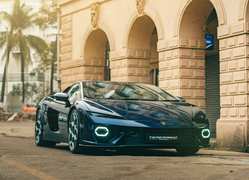
Ferrari’s Electric Gamble: Decoding the ‘Magic Number’ for EV Success
The automotive landscape is undergoing its most radical transformation in a century. While legacy manufacturers are hitting the brakes on their electrification timelines, Ferrari is charging forward with its highly anticipated electric supercar. This bold pivot comes at a time when even the most stalwart champions of the internal combustion engine are beginning to hedge their bets. However, Ferrari has never been a company that plays by the traditional rules of the mass market.
As we look toward the 2026 model year and beyond, the industry is grappling with a cooling trend in high-end electric vehicle (EV) demand. Yet, for Maranello, the transition isn’t merely about volume; it is about protecting the most prestigious brand equity on the planet. RBC Capital analyst Tom Narayan recently shared a critical insight that could define Ferrari’s future: there is a “magic number” the company must hit to ensure its electric venture is not just a technological statement, but a financial success.
The Profitability Paradox in High-End EVs
To understand why this number matters, we have to address the “elephant in the workshop.” Despite the surge in global EV interest, the luxury segment is struggling with an uncomfortable reality: EVs are frequently less profitable than their combustion counterparts. The cost of battery technology, complex software integration, and the repurposing of legacy manufacturing facilities has eroded margins for many European luxury brands.
We saw a prime example in 2025, when Porsche reported a staggering 99% decline in operating profit during the first nine months of the year, falling from €4 billion to a mere €40 million. While external factors like tariffs and volatile demand in the Chinese market played a role, the primary culprit was the immense capital expenditure required to scale EV production. When you are a boutique manufacturer, every unit counts. Ferrari, historically the most profitable luxury brand in the world, is under intense scrutiny to avoid the profit-margin pitfalls that have plagued its peers.
Decoding the Magic Number
According to Narayan, the strategy for Ferrari’s upcoming electric supercar—internally referred to as the “Luce”—is surprisingly grounded. In a landscape where manufacturers are fighting for market share, Ferrari is playing a game of surgical precision.
“As long as they can get 500 to 1,000 people per year to buy an electric supercar from Ferrari, which doesn’t seem like that Herculean of a task, it makes sense they can penetrate that segment of the market,” Narayan noted.
This figure—a target of 500 to 1,000 units annually—is the key. Unlike volume-based automakers that need to move hundreds of thousands of units to achieve economies of scale, Ferrari’s business model thrives on scarcity and extreme exclusivity. By focusing on a “magic number” that represents less than 10% of their total annual production, Ferrari avoids the trap of mass-market EV manufacturing. They aren’t trying to convert the world; they are simply trying to retain their most loyal clients who want a piece of the future, delivered with the soul of a Prancing Horse.
Navigating the Luxury EV Landscape
The challenge for Ferrari is proving that a battery-powered drivetrain can capture the visceral thrill of a V12. Competitors are finding that the “luxury EV” label is losing its novelty. High-performance enthusiasts are looking for more than just 0-60 times; they are looking for engagement.
This is where the high-CPC (Cost-Per-Click) nature of the luxury automotive market comes into play. Search intent for “luxury electric supercars” and “Ferrari EV performance specs” remains incredibly high, reflecting a wealthy demographic that is willing to invest in premium technology. Investors and collectors are not just buying a car; they are buying an asset. Ferrari’s ability to maintain residual value—a notorious weak spot for most EVs—will be the true test of this new electric era.
Market Volatility and the “Cybertruck Effect”
Ferrari’s strategy stands in stark contrast to the volatility seen in the broader EV market. Look no further than the recent frenzy surrounding the Tesla Cybertruck. When Tesla introduced a lower-priced variant, demand spiked, only to be met with logistical hurdles and controversial policy changes regarding Full Self-Driving (FSD) transfers. This friction between brand promise and delivery logistics is exactly what Ferrari intends to sidestep.
By limiting production and managing demand through a curated client list, Ferrari insulates itself from the chaotic fluctuations that define the mass-market EV sector. They are not chasing the “cheaper price point” growth strategy; they are maintaining the premium positioning that keeps their auction values high and their waitlists years long.
The Path Forward for Investors and Collectors
The upcoming release of the Ferrari EV is less about competing with Tesla or Rimac and more about redefining what “luxury mobility” looks like in the 2030s. If Ferrari hits that 500-to-1,000 unit target, they will have successfully bridged the gap between heritage and innovation.
For those watching the market, the metric of success won’t be total units sold, but rather the sustained profit margin per vehicle and the ability to maintain the brand’s “exclusive” status. If you are a prospective buyer or an automotive investor, the takeaway is clear: keep an eye on the production caps. In the world of high-performance luxury, exclusivity is the ultimate hedge against market uncertainty.
Ferrari is betting that its brand heritage can survive the battery revolution, provided they don’t lose sight of the scarcity that makes them the king of the automotive world. As we move closer to the official launch, the industry will be watching to see if this “magic number” strategy keeps Maranello at the top of the food chain.
Are you ready to see how the next generation of supercars will redefine your garage? Stay ahead of the curve by subscribing to our exclusive market updates and joining our newsletter for the latest insights into the future of automotive engineering.