
The Ferrari Electric Supercar Strategy: Why 500 Units Could Be the Magic Number
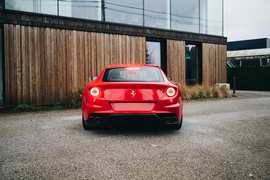
The automotive industry stands at a precarious crossroads in 2025. While legacy manufacturers grapple with cooling demand and the heavy financial burden of shifting production lines, Ferrari remains a distinct outlier. As the world’s most profitable luxury brand, the Prancing Horse is charging ahead with its upcoming electric supercar—a move that defies the current industry retreat from high-end battery electric vehicles (BEVs).
For years, the consensus was that luxury buyers would flock to high-performance electric vehicles. However, market data has proven that demand for ultra-luxury EVs is far more fragmented than initially projected. As we look at the broader landscape of the EV market, including fluctuations in the Tesla Cybertruck delivery timelines and the tightening margins of high-end automotive manufacturing, the success of Ferrari’s electrification strategy hinges on one critical, “magic” number.
The Financial Reality of the Electric Supercar
When we analyze the current state of the industry, a stark reality emerges: EVs are notoriously difficult to turn into profitable ventures. For “legacy” automakers, the cost of repurposing manufacturing facilities and sourcing high-capacity battery tech has decimated bottom lines. Porsche, for instance, experienced a sobering decline in operating profitability throughout 2025, with margins shrinking to near-negligible levels compared to their historical performance.
This isn’t merely a matter of cooling demand; it is a structural issue. Electric vehicles are, by and large, much more expensive to manufacture than their internal combustion engine (ICE) counterparts. While Ferrari has historically maintained the highest profit margins in the industry, the transition to an electric supercar presents a unique challenge to their business model.
Identifying the Magic Number: A Path to Viability
According to RBC Capital analyst Tom Narayan, Ferrari’s success with its upcoming EV (internally referred to as “Luce”) does not require a mass-market adoption strategy. Unlike volume-driven competitors, Ferrari’s strength lies in its scarcity.
Narayan suggests that the Ferrari electric supercar only needs to reach a “magic number” of 500 to 1,000 units per year to achieve long-term financial viability. This target is far from the “Herculean” task many analysts feared. By maintaining a production cap within this narrow bracket, Ferrari can effectively bypass the saturation issues that have plagued other high-end EV manufacturers.
If Ferrari can convert just 500 to 1,000 of its most loyal clients into owners of its new electric supercar, the program will likely pay for itself, preserving the brand’s exclusivity while satisfying regulatory pressures. This strategy mirrors their success with limited-edition V12 models, proving that the Ferrari electric supercar market segment is less about competing with Tesla’s volume and more about sustaining the brand’s elite tier of craftsmanship.
The Luxury EV Market: A Study in Scarcity
The broader luxury sector is currently grappling with “EV fatigue.” High-profile CEOs, including those at the helm of Lamborghini and Rimac, have publicly questioned whether the current appetite for high-performance electric supercars is as deep as it appeared two years ago.

However, Ferrari’s approach is fundamentally different. By positioning the Ferrari electric supercar as a premium, low-volume offering, they avoid the “unprofitable unit” trap. When you manufacture tens of thousands of EVs, margins are thin and cannibalized by development costs. When you build just 500 to 1,000, you are effectively selling a piece of modern automotive art. This is the core reason why Ferrari remains a buy-signal for many institutional investors—their ability to control supply prevents the depreciation cliff that often impacts luxury EVs in the secondary market.
Lessons from the EV Market Landscape
While Ferrari navigates its transition, the rest of the market offers cautionary tales. Take the Tesla Cybertruck, for example. When a cheaper, more accessible version was released, demand spiked, but delivery timelines stretched into 2027. The controversy surrounding Full Self-Driving (FSD) transfer policies—where customers faced sudden policy shifts regarding delivery deadlines—highlighted a lack of trust that often accompanies aggressive scaling.
Ferrari is intentionally avoiding this “scaling trap.” They aren’t trying to democratize the Ferrari electric supercar; they are trying to evolve it. By focusing on that 500-to-1,000-unit window, they ensure that the brand doesn’t experience the brand dilution that comes with bloated waiting lists or uncertain delivery promises.
Strategic Investment and Market Outlook
For high-net-worth enthusiasts and automotive investors alike, the Ferrari electric supercar represents a shift in how we value performance vehicles. High-CPC (Cost Per Click) trends in the automotive search landscape show that interest in “luxury EV investment” and “exclusive electric vehicle release” remains high. However, the search intent has pivoted toward quality over quantity.
Prospective owners are asking: Will this car hold its value? If the production remains limited to that magic number, history suggests the answer is a resounding yes. Unlike standard luxury sedans, the Ferrari electric supercar will likely function as a store of value, provided the brand sticks to its production guns and resists the urge to chase volume at the expense of prestige.
The Road Ahead
Ferrari’s decision to commit to an electric future—even while peers hesitate—is a calculated gamble that relies on the “magic” of exclusivity. By keeping production to that specific, manageable window, they are insulating themselves against the volatility of the broader electric vehicle market.
As we move through 2026 and beyond, the success of the Ferrari electric supercar will be the gold standard for how legacy manufacturers navigate the green transition. They are betting that their brand power can overcome the inherent limitations of battery technology, provided they keep their output aligned with their most dedicated collectors.

Are you looking to stay ahead of the latest developments in the supercar sector? Whether you are a collector tracking the release of the next Prancing Horse or an investor analyzing market shifts, the landscape is moving fast. Connect with our team of industry experts to receive real-time updates on high-end automotive releases and ensure you have the inside track on the future of performance driving. Reach out today to join our exclusive network of automotive enthusiasts.