

Why You Might Feel Sick in an EV and How Mercedes-Benz Plans to Fix It
If you’ve ever climbed into a modern electric vehicle (EV) for a ride and felt an unshakeable wave of nausea, you aren’t losing your mind. As someone who has spent a decade test-driving everything from internal combustion engine (ICE) sports cars to the latest electric hypercars, I can tell you that the physiological struggle is very real. While we celebrate the blistering acceleration and silent cabins of the new electric era, there is a hidden side effect: EV motion sickness.
Many passengers report feeling dizzy or nauseated, even during short commutes. This isn’t just about sensitive stomachs; it is a fundamental mismatch between the human sensory system and the physics of modern electric propulsion. The good news? Mercedes-Benz is actively developing a solution to mitigate this discomfort, potentially changing how we experience mobility in the future.
The Physics of EV Motion Sickness
To understand why EV motion sickness occurs, we have to look at how our bodies perceive movement. In a traditional gasoline-powered car, your brain receives a symphony of sensory input: the low-frequency rumble of the engine, the subtle rhythmic vibrations through the chassis, and the mechanical anticipation of gear changes. These signals act as a “pre-warning” system for your inner ear, telling your brain, “Hey, we are about to accelerate or shift.”
Electric vehicles strip all of that away. Because they lack internal combustion engines, they are eerily quiet and operate with near-zero vibration. The torque delivery is instantaneous. When you press the pedal in a high-performance EV, you aren’t just moving; you are launching. Furthermore, the regenerative braking systems—designed to extend your range and improve energy efficiency—can cause sharp, unpredictable deceleration that feels jerky to the vestibular system.
Your eyes look out the window and see the world rushing by, but your inner ear—the organ responsible for your sense of balance—doesn’t receive the auditory or tactile cues to match that visual input. Researchers have highlighted that this sensory conflict forces the brain to “guess” what is happening, resulting in the classic symptoms of motion sickness. Essentially, your brain is panicking because it lacks the traditional markers of a motorized vehicle.
The High-Tech Fix: How Mercedes Plans to Restore Equilibrium
Mercedes-Benz has recognized that for electric mobility to be truly premium, it must be universally comfortable. The German automaker has filed patents for a sophisticated system designed to bridge the gap between human perception and vehicle performance. Instead of relying on gimmicky solutions, they are looking at how environmental factors influence our sense of orientation.
The proposed system involves a symphony of airflow and ambient lighting to provide the brain with the cues it currently lacks in an EV environment. Imagine a cabin that “breathes” with the car. As the vehicle accelerates, specific haptic-like air vents could adjust airflow patterns to mimic the sensation of forward momentum. As the car slows, the flow eases off, providing a tactile transition that tells your inner ear that deceleration is occurring.
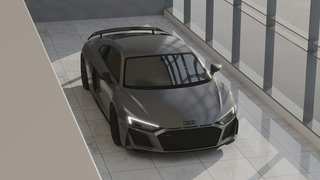
Complementing this, the ambient lighting system would pulse or shift in color temperature, creating a visual rhythm that corresponds with the car’s throttle and braking inputs. By “visualizing” the vehicle’s dynamics through subtle light cues, the system essentially acts as a set of training wheels for your vestibular system. It creates a cohesive sensory experience where what you see, feel, and hear are finally in sync.
Why This Matters for the Future of Automotive Comfort
While these innovations are currently in the patent stage, they highlight a pivotal shift in automotive engineering. For a decade, the focus was purely on range, battery density, and kilowatt-per-hour efficiency. Moving into 2025 and beyond, the industry is pivoting toward EV passenger comfort and the holistic user experience.
As automakers strive to increase the market share of premium electric sedans and SUVs, addressing motion sickness in electric cars is no longer a niche concern—it’s a prerequisite for luxury. The goal is to provide that “instant speed” benefit while ensuring the cabin remains a sanctuary of peace rather than a source of distress.
High-CPC Investment and Technology Trends
From an industry standpoint, we are seeing massive capital flow into advanced automotive sensory systems and human-machine interface (HMI) design. Investors and manufacturers are prioritizing technologies that enhance the “in-car experience,” a sector with high potential for long-term growth. If you are tracking the latest trends in the automotive sector, you know that the companies solving the human element of technology will be the ones that win the market share in the coming years.
The integration of artificial intelligence with chassis control and climate systems—the very tech Mercedes is exploring—represents a multibillion-dollar frontier. This isn’t just about fixing a stomach ache; it’s about refining the interface between machine and occupant to ensure that the transition from fossil fuels to electrons is seamless and, most importantly, comfortable for every passenger.
Final Thoughts
Electric vehicles are undoubtedly the future of transport, offering benefits that internal combustion cars simply cannot match. However, the engineering team at Mercedes-Benz proves that they understand the human cost of this transition. By addressing the fundamental disconnect in our sensory processing, they are working toward a future where “silent speed” doesn’t have to come at the expense of your well-being.
Whether this technology hits the showroom floor in an upcoming EQ-series model or evolves into a suite of standard software updates, the direction is clear: the car of the future will be more attuned to you than ever before.
Are you interested in learning more about how cutting-edge technology is reshaping the driving experience? Subscribe to our newsletter today to stay updated on the latest breakthroughs in automotive innovation and luxury vehicle engineering!