
Why You Feel Sick in an Electric Vehicle and How Future Tech Is Solving It
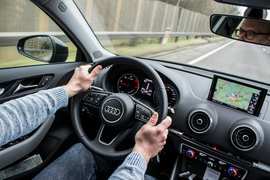
If you’ve ever climbed into a cutting-edge electric vehicle (EV) for a ride across town and felt a wave of unexpected nausea, you aren’t alone, and it certainly isn’t all in your head. As automotive technology transitions away from internal combustion engines, we are witnessing a strange physiological side effect of progress: EV motion sickness. After a decade in the automotive industry, I’ve seen firsthand how the rapid evolution of torque and silent acceleration has outpaced our inner ears’ ability to keep up. Fortunately, manufacturers like Mercedes-Benz are now developing sophisticated solutions to remedy this modern comfort crisis.
The Science Behind EV Motion Sickness
To understand why a state-of-the-art electric vehicle might leave you feeling dizzy, we have to look at the disconnect between sensory inputs. In a traditional gas-powered car, your brain receives a constant stream of “cues” that predict movement. You hear the engine rev as the driver accelerates, you feel the mechanical vibrations of the transmission shifting gears, and you sense the subtle shuddering of the drivetrain. These environmental signals act as a preemptive warning system for your vestibular system—the part of the inner ear responsible for balance.
In an electric vehicle, those cues are effectively silenced. EVs offer near-instant, seamless acceleration without the auditory buildup of an engine. When you combine this with aggressive regenerative braking—which slows the vehicle rapidly to capture energy—the experience can be jarring. Your eyes see the landscape flying by, but your inner ear receives conflicting data because the physical “pre-cues” are absent.
Research from institutions like France’s Université de Technologie de Belfort-Montbéliard highlights this disconnect. The brain thrives on predictability; when the physical feedback loop is severed, the result is often nausea. It’s a sensory mismatch that turns a premium luxury drive into a taxing experience for passengers.
How Mercedes-Benz Plans to Counteract Dizziness
Mercedes-Benz has recently filed patents for a groundbreaking cabin-management system designed to bridge the gap between EV performance and human comfort. Rather than simply softening the acceleration—which would defeat the purpose of driving a high-performance EV—they are looking at environmental cues to “re-sync” the human brain.
The proposed system utilizes a synergy of airflow and dynamic ambient lighting to provide the sensory feedback currently missing from the EV experience. Imagine this: as you accelerate, the car’s climate control system releases subtle, timed bursts of air through specific cabin vents. This airflow mimics the sensation of movement, providing a physical indicator to your brain that the vehicle is picking up speed.
Simultaneously, the interior ambient lighting—which has become a hallmark of modern Mercedes interiors—would shift in pattern or intensity to mirror the car’s trajectory. By introducing these visual and tactile cues, the system essentially acts as a “subtitle” for your vestibular system, helping it predict vehicle behavior before it occurs. While these technologies are still in the patent phase, they represent a vital step toward mastering the comfort levels of the next generation of electric mobility.
The Broader Context: Efficiency and Luxury in 2025

As the market for EVs expands, consumer expectations are shifting. Buyers are no longer just looking for range; they are demanding a holistic sensory experience that avoids the pitfalls of early-stage electric technology. Whether you are shopping for a high-end luxury sedan or a high-performance crossover, the focus is squarely on “smart comfort.”
Investing in modern automotive technology often means navigating the trade-offs of instant torque versus passenger comfort. High-performance electric motors provide immense power, and while they offer unparalleled efficiency, the drive quality must match the luxury status of the brand. This is where high-CPC (Cost Per Click) topics like EV cabin comfort systems, regenerative braking dynamics, and advanced vehicle interior design are gaining significant traction in the automotive sector.
Manufacturers are prioritizing these developments to ensure that the transition to sustainable energy does not come at the cost of the passenger experience. For the average buyer, this means we will soon see more adaptive suspension systems, AI-driven cabin climate control, and intelligent interior displays that prioritize wellness alongside speed.
Sustainability Meets Performance: The Future of Transit
The need for better integration of human comfort and machine performance isn’t limited to the road. Much like the automotive industry’s shift toward EV comfort, the maritime world is seeing similar innovations. Projects like the Gary Grant 502-foot hybrid superyacht concept exemplify the trend of using cutting-edge engineering to solve traditional problems.
This gigayacht concept combines gas turbines for high-speed transit with electric waterjets for silent, emissions-free cruising. It is a testament to the fact that whether on land or at sea, the future of transportation lies in hybridizing power sources to achieve the perfect balance of performance and environmental responsibility. Just as Mercedes is working to ensure your commute doesn’t lead to motion sickness, yacht designers are ensuring their massive vessels can operate with the quiet efficiency of a small electric commuter craft.
What This Means for You
If you are currently in the market for an electric vehicle, pay close attention to how the car handles regenerative braking and acceleration profiles. Many modern EVs now feature “Comfort” or “One-Pedal Drive” settings that allow you to adjust the deceleration rate, which can significantly mitigate symptoms of motion sickness for sensitive passengers.
As we look toward the later half of the decade, expect these adaptive comfort systems to move from “experimental” to “standard.” The goal is to provide a drive that is as smooth as it is silent, ensuring that the thrill of electric power is enjoyed by everyone in the cabin, not just the driver.
The automotive industry is rapidly evolving to prioritize not just how we get from point A to point B, but how we feel while doing it. If you’re ready to upgrade your driving experience or have questions about which electric models offer the best ride quality for your lifestyle, reach out to our team of experts today. Let us help you navigate the future of sustainable, high-performance transport—schedule your personalized consultation now.